
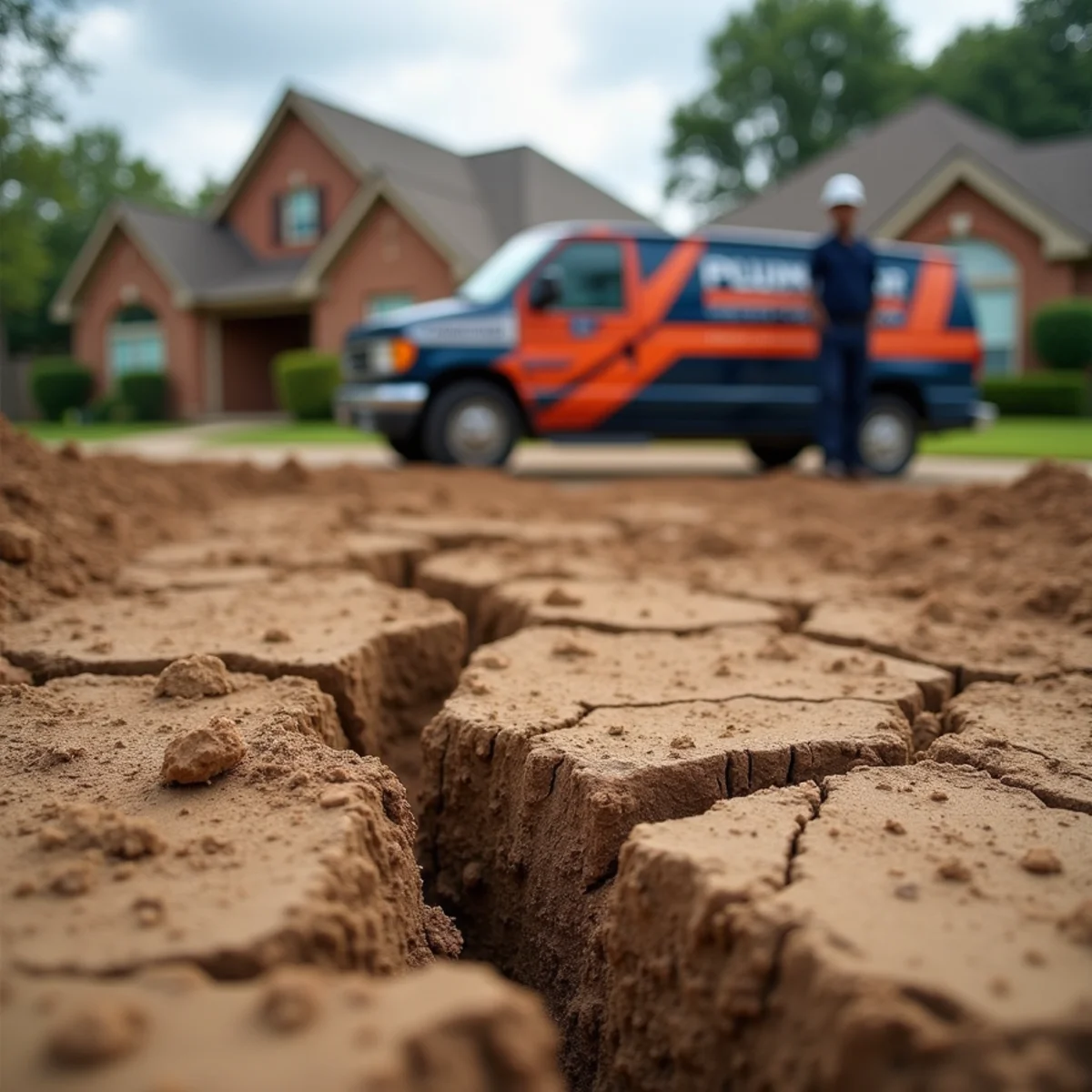
If you've owned a home in McKinney for a few years, you've probably seen it: hairline cracks marching up the drywall, a door that sticks in August and swings free in January, a corner of the slab that seems to have shifted. The culprit is usually the same thing that gives North Texas its rich farmland — the soil.
McKinney sits on the Blackland Prairie, and the clay beneath most local homes is one of the most 'expansive' soils in the country. That single geological fact is behind a large share of the slab leaks we repair. Understanding how it works helps you spot a leak early, when the fix is cheapest, instead of after it has worked on your foundation for months.
What 'expansive clay' actually does
Blackland Prairie clay — sometimes called Houston Black clay — is rich in minerals that absorb water and swell. When it rains, the clay soaks up moisture and expands, sometimes lifting the ground several inches. In a Texas drought, it dries out, shrinks, and pulls away, leaving gaps and settling.
Your home's concrete slab sits directly on this soil. So as the clay swells and shrinks through wet springs and dry summers, the foundation flexes with it — heaving up in one spot, settling in another. Roughly two-thirds of homes in this area are built on it, which is why foundation and slab-leak work is so much more common here than in places with stable, sandy soil.
How soil movement turns into a slab leak
Cast into that same slab, or running just beneath it, are your water supply lines and drain lines — often copper on the supply side. When the foundation flexes, those rigid pipes don't. They get bent, stressed at joints, and abraded where they rub against concrete or rebar. Over years of the clay's seasonal push and pull, a pinhole opens, or a joint fails, and now you have water leaking under your home.
It's a slow-motion process. That's why slab leaks tend to show up in homes that are 10, 15, 20 years old — not because the pipe was defective, but because the ground spent two decades working it loose. It's also why McKinney sees repeat slab leaks: the same soil movement that caused the first one is still there.
The warning signs to watch for
A slab leak hides under concrete, but it leaves clues. Catching them early is the difference between a contained repair and a flooded, mold-prone floor.
- A warm or hot spot on the floor — often the first sign of a hot-water-line leak
- The sound of running water when every fixture is off
- An unexplained jump in your water bill with no change in usage
- A sudden drop in water pressure
- Damp carpet, warped hardwood, or a mildew smell with no obvious source
- New or worsening cracks in flooring, walls, or the foundation
Any one of these alone might be something minor. Two or three together point strongly to a slab leak, and it's worth getting electronic leak detection done before the water does more damage.
How we find and fix it
We start with non-invasive detection — acoustic listening equipment, pressure testing, and sometimes thermal imaging — to pinpoint the leak without opening the slab blindly. Once we know exactly where it is, we choose the least disruptive repair: a direct spot repair through the floor, a reroute that bypasses the bad section through walls and attic, or tunneling under the foundation when the leak sits somewhere we shouldn't cut into.
The right method depends on where the leak is, what your flooring is, and how much life is left in the surrounding pipe. A center-of-slab leak under tile is a different job than a perimeter leak under carpet, and the honest quote comes after detection, not over the phone.
Prevention: manage the soil, not just the pipe
You can't change the clay, but you can reduce how violently it swings. The goal is to keep soil moisture around the foundation as steady as possible year-round:
- Water your foundation in summer droughts — a soaker hose a foot or two out, running consistently, keeps the clay from shrinking away
- Fix drainage that dumps water against the slab in heavy rain — you want even moisture, not soaked-then-baked
- Keep large trees a sensible distance from the foundation; their roots pull huge amounts of moisture from the clay
- Address foundation issues promptly — foundation movement and slab leaks feed each other
Frequently asked questions
Not every single one, but the large majority do — roughly two-thirds of homes in this area sit on Blackland Prairie clay. Some newer developments used engineered pads or pier-and-beam designs that behave differently, but if you're in a typical slab-on-grade McKinney home, expansive clay is almost certainly under you.
McKinney Pro Plumbers
Licensed McKinney plumbers serving Collin County and North Texas. Work performed under a Texas Responsible Master Plumber (TSBPE). Questions? Call (831) 290-4327.