
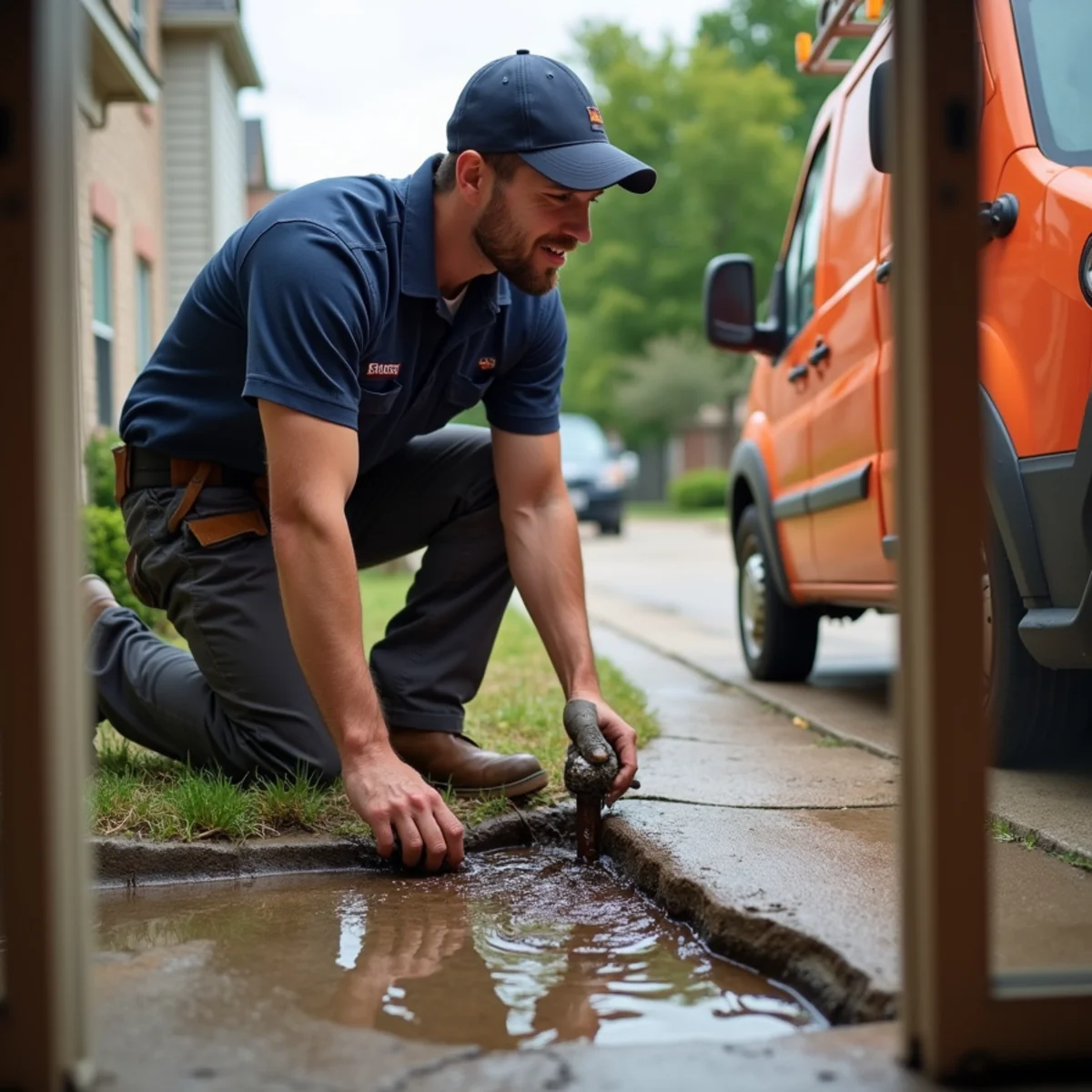
When wastewater comes up instead of going down — bubbling out of a tub drain, backing into a shower, or overflowing a floor drain in the garage — you've got a blocked main sewer line. Everything the house sends down has nowhere to go, so it takes the lowest exit it can find.
This is one of the few plumbing problems that's a genuine health hazard on top of a property-damage problem. Raw sewage carries bacteria, viruses, and parasites. In older Allen and Plano neighborhoods, the usual culprit is tree roots or a collapsed clay line; in newer builds, it's often grease, wipes, or a bellied pipe. Either way, the response is the same, and speed matters.
Stop using water — every drop makes it worse
The instant you see a backup, quit adding to it. No flushing, no sink, no dishwasher, no washing machine, no shower. Every gallon you send down has to go somewhere, and with the main blocked, that somewhere is your floor. Warn everyone in the house before someone flushes out of habit.
If the backup is severe or spreading, shut off the water supply at the main so no one can add to it accidentally, and stop any running appliances mid-cycle.
Treat it as contaminated — because it is
Sewage is Category 3 water, the dirtiest classification. Keep kids and pets out of the affected area entirely. If you have to be near it, wear rubber gloves, boots, and eye protection, and don't touch your face. Ventilate the space by opening windows.
Find the cleanout and relieve pressure (if you can do it safely)
Most Allen and Plano homes have an exterior sewer cleanout — a capped pipe, usually white PVC, sticking up a few inches near the foundation or between the house and the street. If sewage is backing up inside the house, carefully opening the cleanout cap can redirect the overflow outside instead of into your living space.
Do this only if you're comfortable and protected — the line may be under pressure, and it can release quickly. If you're unsure, leave it and let the plumber handle it. Never pour chemical drain cleaner into a fully backed-up main; it won't clear a root mass or a collapse, and it turns the standing water into a caustic hazard for whoever works on it next.
Why it happened — and why a camera matters
Clearing the blockage stops today's emergency. Finding out why it happened stops the next one. A sewer camera inspection sends a waterproof camera down the line so we can see exactly what's going on: a ball of tree roots, a section of collapsed clay pipe, a low spot (belly) where waste pools, or a grease and wipe clog.
That distinction drives the repair. Roots and grease often clear with a cable machine or hydro jetting and a maintenance plan. A collapsed or bellied line needs a spot repair or, in bad cases, a longer replacement. Older neighborhoods east of US 75 and around central Plano frequently run original clay sewer pipe, which cracks at the joints and invites roots — so a camera pays for itself by telling you whether you're looking at a $400 cleaning or a bigger fix.
After the backup: cleanup and prevention
Once the line is clear, the space has to be cleaned, disinfected, and dried out properly — mold can start within a day or two on wet materials. Document everything with photos for insurance before disposal; many policies cover sudden backups, especially with a sewer backup rider.
- Discard porous materials that contacted sewage; disinfect hard surfaces
- Dry the area thoroughly with fans and dehumidifiers
- Consider a backwater valve if your home has had repeat backups
- Never flush "flushable" wipes, paper towels, or grease — three of the most common repeat offenders
City main vs. your lateral: who is responsible for the blockage?
One question decides who pays and who does the work: is the blockage in your private sewer lateral or in the city main? In Plano and Allen, as in most Texas cities, the homeowner owns and maintains the lateral — the pipe running from the house to where it ties into the public main, usually out near the street or an easement. The city maintains the main itself.
That line matters because most backups sit on the homeowner's side. Roots invading a clay lateral at its joints, a bellied section that pools waste, and grease clogs almost always fall to you. But not always — if the city main is surcharged or blocked, sewage can push back up several homes at once, and that is the city's responsibility. A camera inspection settles it by showing exactly where the obstruction sits relative to your property line.
Older Plano and Allen neighborhoods east of US 75 are the classic setup: mature shade trees over original clay-belt laterals, decades of seasonal soil movement cracking the joints, and roots doing the rest. That combination is why these streets see repeat backups that newer PVC-lined subdivisions rarely do.
Preventing the next backup: jetting, a cleanout, and a schedule
Once the line is clear and you know why it failed, a little planned work keeps you out of the next emergency. Cabling punches a hole through a clog; it does not clean the pipe wall.
- Hydro jetting scours roots, grease, and scale off the full pipe diameter with high-pressure water — a far more thorough reset than cabling, and it buys longer between service intervals
- A camera inspection after clearing confirms the line is actually clean and flags any belly or cracked joint before it clogs again
- If your home has no accessible cleanout, installing one gives a plumber a direct, fast entry point next time — cheaper and quicker than pulling a toilet in a crisis
- On a lateral with known roots, put jetting on a schedule — every 12 to 24 months, ahead of the wet season that swells the clay and drives roots toward the pipe
For a lateral that has collapsed or bellied past the point of maintenance, a spot repair or trenchless lining is the permanent fix. A camera tells us which category you are in, so you spend on the right solution instead of repeat clearings.
Frequently asked questions
That's a classic sign of a main-line blockage. The toilet flush has nowhere to go past the clog, so it backs up through the lowest opening — usually a first-floor tub or shower. It means the problem is in the main sewer line, not just one fixture, and needs a professional clearing.
McKinney Pro Plumbers
Licensed McKinney plumbers serving Collin County and North Texas. Work performed under a Texas Responsible Master Plumber (TSBPE). Questions? Call (831) 290-4327.