
The neighborhoods around the historic McKinney square are some of the most charming in Collin County — deep porches, mature pecan trees, and homes that have stood since before World War II. That age is the appeal. It is also the reason the plumbing behaves nothing like the systems in a Stonebridge Ranch build.
Most pre-1950 houses in the area were originally plumbed with galvanized steel supply lines and cast-iron drains, and a good number still run at least some of that original pipe. These materials were built well for their day. Seventy-plus years later, they are near or past the end of their service life, and they fail in predictable ways.
If you own one of these homes, you do not need to panic and you do not need to gut the walls. You do need to understand what you are working with, so you can plan updates before a slow decline turns into a burst line on a holiday weekend.
What is actually in the walls
Galvanized steel supply lines
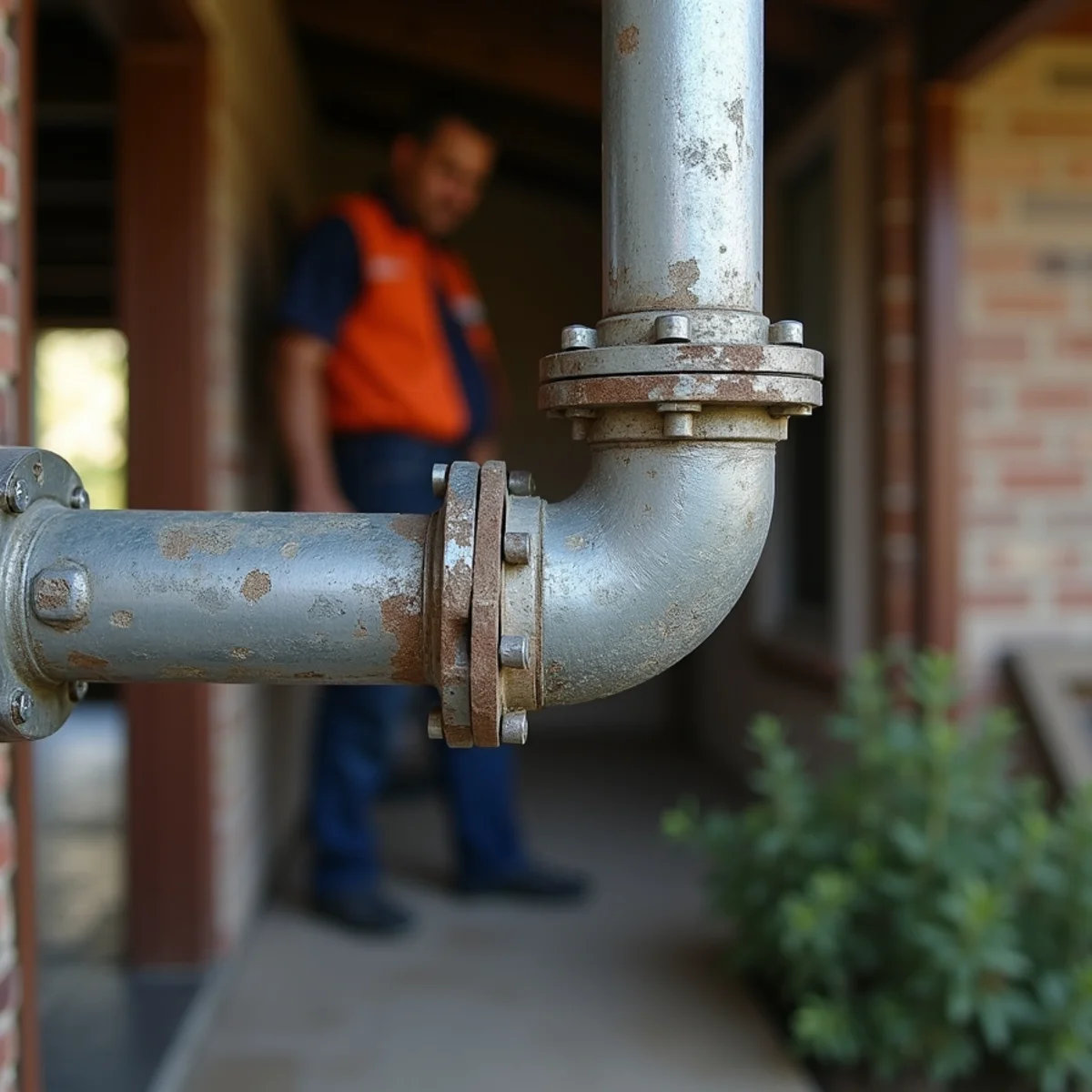
Galvanized pipe is steel dipped in a protective zinc coating. That coating wears away from the inside over decades, and once it is gone the exposed steel corrodes and scales. The pipe narrows from the inside out — a half-inch line can close down to the diameter of a pencil — which is why so many historic homes have miserable water pressure that no amount of cleaning fixes. The corrosion also sheds into the water, which is where the brown or rusty tint at the tap comes from, worst first thing in the morning.
Cast-iron drain and waste lines
Cast iron was the drain standard for generations, and it is genuinely durable — but it corrodes and roughens on the inside, and the older sections can crack or develop pinholes. Rough interior walls snag debris and cause repeat clogs. Cracked hubs and joints below the slab let in the Blackland Prairie clay and the tree roots that thrive in it. A drain that backs up again a month after it was cleared is often telling you the pipe itself has failed, not that the clog came back.
The warning signs, ranked
Old plumbing rarely fails all at once. It tells you it is tired first. Watch for these, roughly in order of how seriously to take them:
- Rusty or brown-tinted water, especially after the house has sat unused overnight — a strong sign of galvanized corrosion.
- Water pressure that has slowly gotten worse over years and does not improve after clearing aerators.
- Recurring drain clogs in the same line despite professional cleaning — the pipe interior is likely failing.
- Visible corrosion, flaking, or rust weeping at exposed pipe in the basement, crawlspace, or under sinks.
- A metallic taste or discolored laundry.
- Damp spots or a musty smell along a wall or slab that could point to a hidden leak in aging pipe.
None of these are emergencies on their own. Together, they mean the system is aging out and it is time to plan rather than react.
Fixing it without wrecking the character
The concern we hear most from historic-home owners is that any real plumbing work means tearing out original plaster, trim, and floors. It does not have to. There are a few paths, and the right one depends on how much original pipe is left and what your renovation plans are.
Whole-home repipe
When galvanized supply is throughout the house, replacing it with modern PEX or copper solves the pressure and rusty-water problems for good. An experienced crew routes new lines through existing wall and ceiling cavities with the fewest, smallest access openings possible, working around the features that make the house special. On a repipe we back the work with a lifetime workmanship warranty, because it is meant to be the last time those supply lines are touched.
Trenchless sewer and drain options
For failing cast-iron drains below the slab, trenchless methods — pipe lining or pipe bursting — can rehabilitate or replace the line through small access points instead of jackhammering the whole floor. Not every situation qualifies, which is why we camera the line first, but where it works it spares the original floors.
Phased updates
If a full repipe is not in the budget this year, we can prioritize — replace the worst runs, tie new fixtures into modern pipe as you renovate room by room, and keep an eye on the rest with periodic camera checks. A plan beats a surprise.
A note on lead and older fittings
Homes of this era can also have lead solder at copper joints or, occasionally, a lead service component. If you have young children or you are simply cautious about water quality, it is worth having the water tested and the fittings evaluated. Updating supply lines during a repipe is a natural moment to eliminate the old solder and fittings along with the galvanized pipe.
Frequently asked questions
Galvanized supply lines generally last 40 to 70 years, and many homes near downtown McKinney are well past that. Hard water speeds up the internal scaling, so pressure and water-color problems often show up toward the shorter end of that range here.
McKinney Pro Plumbers
Licensed McKinney plumbers serving Collin County and North Texas. Work performed under a Texas Responsible Master Plumber (TSBPE). Questions? Call (831) 290-4327.