
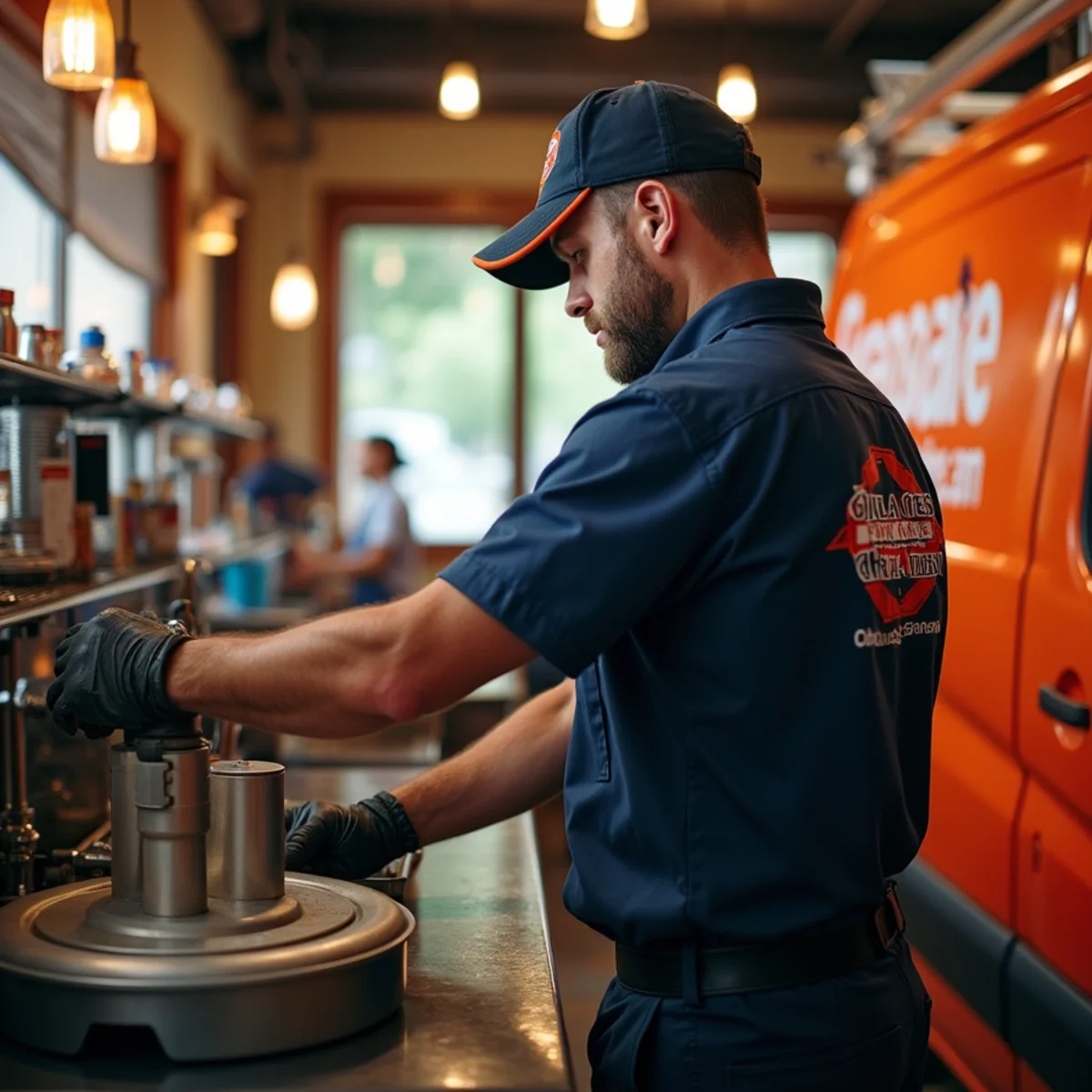
In a restaurant, the plumbing is not a background utility — it is part of whether you can open tonight. A grease-clogged line that backs up into the kitchen during a Friday dinner rush can cost you the service, put you sideways with the health inspector, and, if fats and oils reach the city sewer, put you on the wrong end of a municipal fine. All of it is preventable.
McKinney and Frisco are dense with restaurants, and both cities — like every city in North Texas — regulate what commercial kitchens can send down the drain. The grease trap is the device that keeps you compliant, and the maintenance schedule around it is the difference between routine upkeep and an emergency shutdown.
This is a practical guide for owners and managers: what the trap does, how to keep it working, and how to avoid the backups that close kitchens.
What the grease trap does, and why the city cares
A grease trap (or grease interceptor) sits between your kitchen drains and the city sewer. Wastewater flows in, slows down, and the fats, oils, and grease — collectively "FOG" — float to the top while food solids sink, and the cleaner water in the middle passes on to the sewer. The trap holds the FOG so it does not congeal in the city’s lines.
That is why cities regulate it. FOG poured into the public sewer is the leading cause of municipal main blockages and sanitary overflows. Municipalities require food-service establishments to have a properly sized trap, to keep it maintained, and to keep records proving it. Fall behind, and you are looking at citations, fines, and in serious cases a shutdown until you are compliant.
How often to service the trap
The common rule of thumb is the "25% rule": pump the trap when the combined layer of grease and solids reaches a quarter of the trap’s total depth. In practice, how often that happens depends on your volume, your menu, and your trap size.
- High-volume kitchens or heavy fryer use: often every 1 to 3 months.
- Moderate-volume restaurants: commonly every 1 to 3 months as well, verified against the 25% rule.
- Smaller operations or those with larger interceptors: sometimes quarterly.
- Undersized indoor traps: may need service as often as every few weeks.
Check your local ordinance — some North Texas cities set a maximum interval regardless of how full the trap looks, often 90 days. Do not guess. An undersized or overdue trap stops separating grease effectively, and that is when FOG rides straight into your drain lines and the city sewer.
Daily habits that keep grease out of the drain
The trap is the last line of defense, not the first. The less FOG that reaches it, the longer everything lasts and the fewer surprises you get. Train the whole kitchen on these:
- Never pour fryer oil, grease, or fat down any drain. Collect used cooking oil for recycling pickup.
- Scrape plates, pans, and prep waste into the trash or compost before anything hits the dish sink.
- Use drain screens on every sink and floor drain to catch food solids.
- Wipe greasy cookware with a paper towel before washing.
- Do not rely on hot water and soap to "melt" grease down the line — it just re-solidifies further down the pipe.
- Post simple reminders at the dish pit and prep stations; staff turnover means the training never really ends.
Keeping the drain lines clear
Even with a well-maintained trap, commercial kitchen lines accumulate grease and food film on the pipe walls over time. The gold standard for cleaning them is hydro jetting — a high-pressure water jet that scours the pipe interior back to bare wall, rather than a cable that just punches a hole through the clog. For a busy kitchen, periodic jetting of the main kitchen line prevents the slow-building backup that always seems to strike at the worst moment.
If your line does back up, it is a genuine emergency — a health-code and revenue problem at once. That is why we run 24/7 commercial service across Collin County, with a 60-minute emergency response promise. But the goal is to never need it, and a maintenance schedule gets you there.
Set up a service schedule and forget the panic
The restaurants that never have a grease emergency are the ones on a scheduled program — trap serviced on the 25% rule or the city’s interval, kitchen lines jetted on a regular cadence, and records kept for the inspector. It is predictable, it is budgetable, and it is far cheaper than a shutdown.
We work with McKinney and Frisco restaurant owners to set up maintenance that fits their volume and their city’s rules, and we handle the emergencies when a line does back up. Call (831) 290-4327 to get on a schedule before your trap decides the timing for you.
Frequently asked questions
Service it when grease and solids reach 25% of the trap’s depth — for many McKinney and Frisco kitchens that is every one to three months, and high-volume fryers can need it sooner. Check your city’s ordinance too, since some cap the interval at 90 days regardless of fill.
McKinney Pro Plumbers
Licensed McKinney plumbers serving Collin County and North Texas. Work performed under a Texas Responsible Master Plumber (TSBPE). Questions? Call (831) 290-4327.