
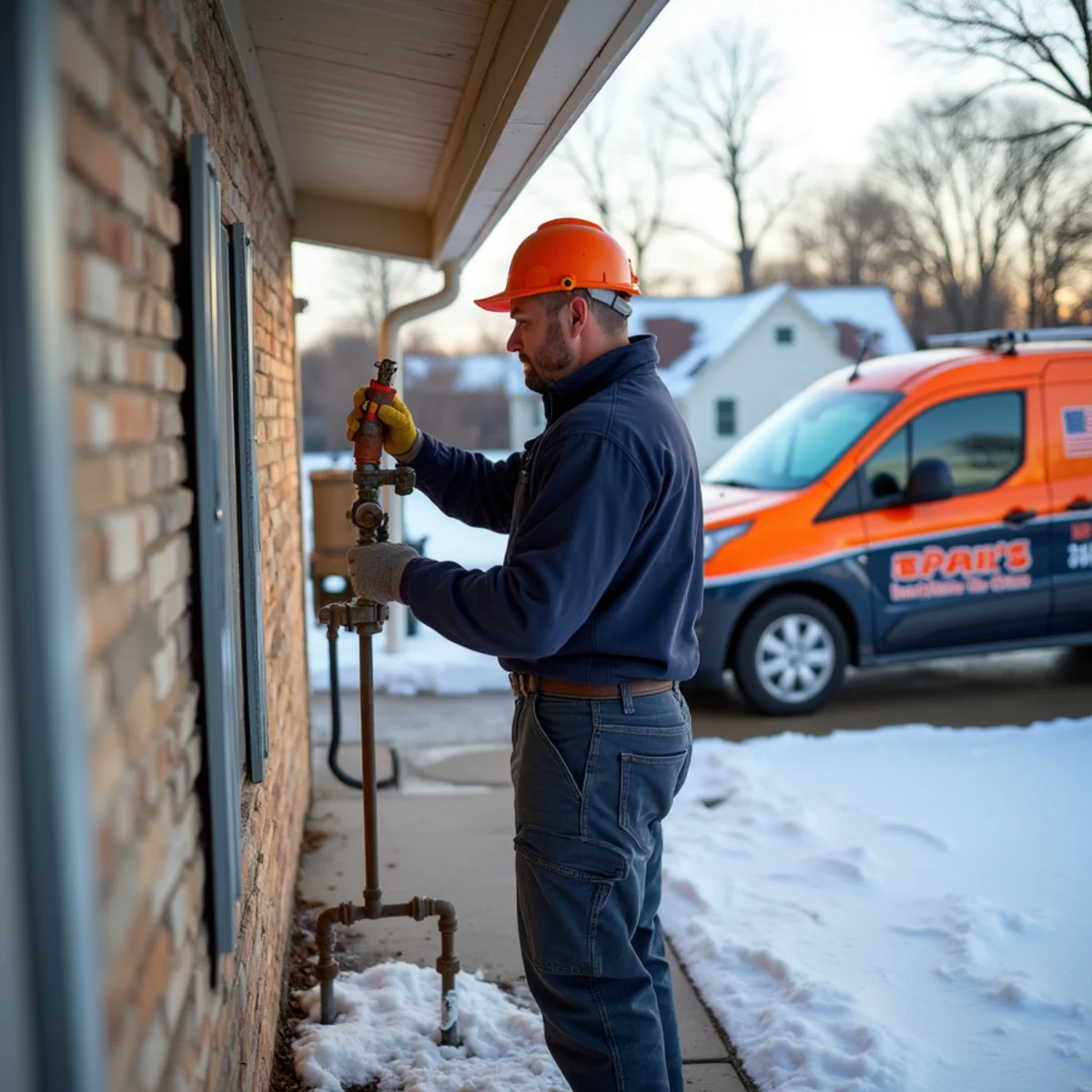
In February 2021, Winter Storm Uri put Collin County through days of single-digit temperatures, and the plumbing damage was staggering — burst pipes, flooded homes, and weeks-long waits for repairs. The hard lesson: Texas homes are built to shed summer heat, not to survive a deep freeze, and the plumbing runs prove it.
The good news is that most freeze-burst damage is preventable with a little preparation. The pipes at risk are predictable, the precautions are cheap, and the single most valuable thing you can do — knowing how to shut your water off — takes ten minutes to learn. Here's the freeze-proofing playbook, built on what Uri taught us.
Why Texas pipes burst in a freeze
When water freezes it expands by about nine percent. In a closed pipe, that expanding ice raises pressure downstream of the ice plug until something gives — usually a split in the pipe or a blown fitting. Here's the part that surprises people: the pipe often doesn't leak while it's frozen. The break stays sealed by ice, then floods the house when everything thaws and starts flowing again.
Texas homes make it worse because our vulnerable pipes are exposed. Builders here run water lines through unheated attics, exterior walls with thin insulation, and unprotected outdoor spigots — placements that are fine in a normal winter and disastrous in a hard freeze.
Know the pipes most at risk
- Outdoor hose bibs and spigots — the most common freeze-burst point
- Pipes in unheated attics, especially runs across the attic to a second-floor bathroom
- Pipes in exterior walls, where insulation is often thin or missing
- Lines in the garage, and any exposed pipe in an uninsulated space
- Pool and irrigation plumbing, and outdoor kitchens
- Pipes under sinks on exterior walls — kitchen and bathroom cabinets against an outside wall
Before winter: the prevention checklist
- Disconnect and drain garden hoses; store them so the spigot can drain freely
- Install insulated covers on every outdoor faucet — they cost a few dollars each
- Wrap exposed pipes in attics, garages, and crawl spaces with foam pipe insulation or heat tape
- Seal gaps and cracks where cold air reaches pipes in walls and along the foundation
- Know where your main shutoff is and confirm it actually works before you need it
- Keep a meter key on hand in case your shutoff is at the curb meter box
The insulated spigot covers and foam sleeves are the highest-value dollars you'll spend all winter. A $15 trip to the hardware store protects the exact pipes that burst first.
During a hard freeze: what to do
When a hard freeze is forecast — sustained temperatures in the low 20s or below, especially overnight — take these steps:
- Let a pencil-thin stream of water drip from faucets on exterior walls; moving water resists freezing and relieves pressure
- Open cabinet doors under sinks on outside walls to let warm room air reach the pipes
- Keep the heat on and set no lower than the upper 60s — do not turn it off to save money
- If you leave town, either keep the heat on or have the system drained and winterized
- Keep the garage door closed if water lines or the water heater are in there
One more Uri lesson worth repeating: keeping the heat on isn't just about comfort. Many insurance claims after Uri hinged on whether the homeowner maintained heat. Turning the thermostat off during a freeze can be treated as negligence and jeopardize a claim.
If a pipe freezes — or bursts
If a faucet won't run during a freeze, you likely have a frozen pipe. Keep the faucet open, warm the area gently (a space heater or hair dryer on the accessible section — never an open flame), and let it thaw slowly. The open faucet gives melting ice and pressure somewhere to go.
If a pipe has already burst, this is where preparation pays off: go straight to your main shutoff and kill the water, open faucets to drain the lines, and start documenting for insurance. Then call for emergency service. We run 24/7 across Collin County with a 60-minute response, and freeze events are exactly when that response matters — but the pipe you insulated in November is the burst you never have to call about.
Frequently asked questions
Exposed, unprotected pipes can start to freeze once the temperature drops to around 20°F, and the risk climbs the longer it stays there. Sustained cold overnight is more dangerous than a brief dip. Because Texas homes run pipes through unheated attics and exterior walls, our pipes freeze more easily than the outdoor temperature alone would suggest.
McKinney Pro Plumbers
Licensed McKinney plumbers serving Collin County and North Texas. Work performed under a Texas Responsible Master Plumber (TSBPE). Questions? Call (831) 290-4327.