
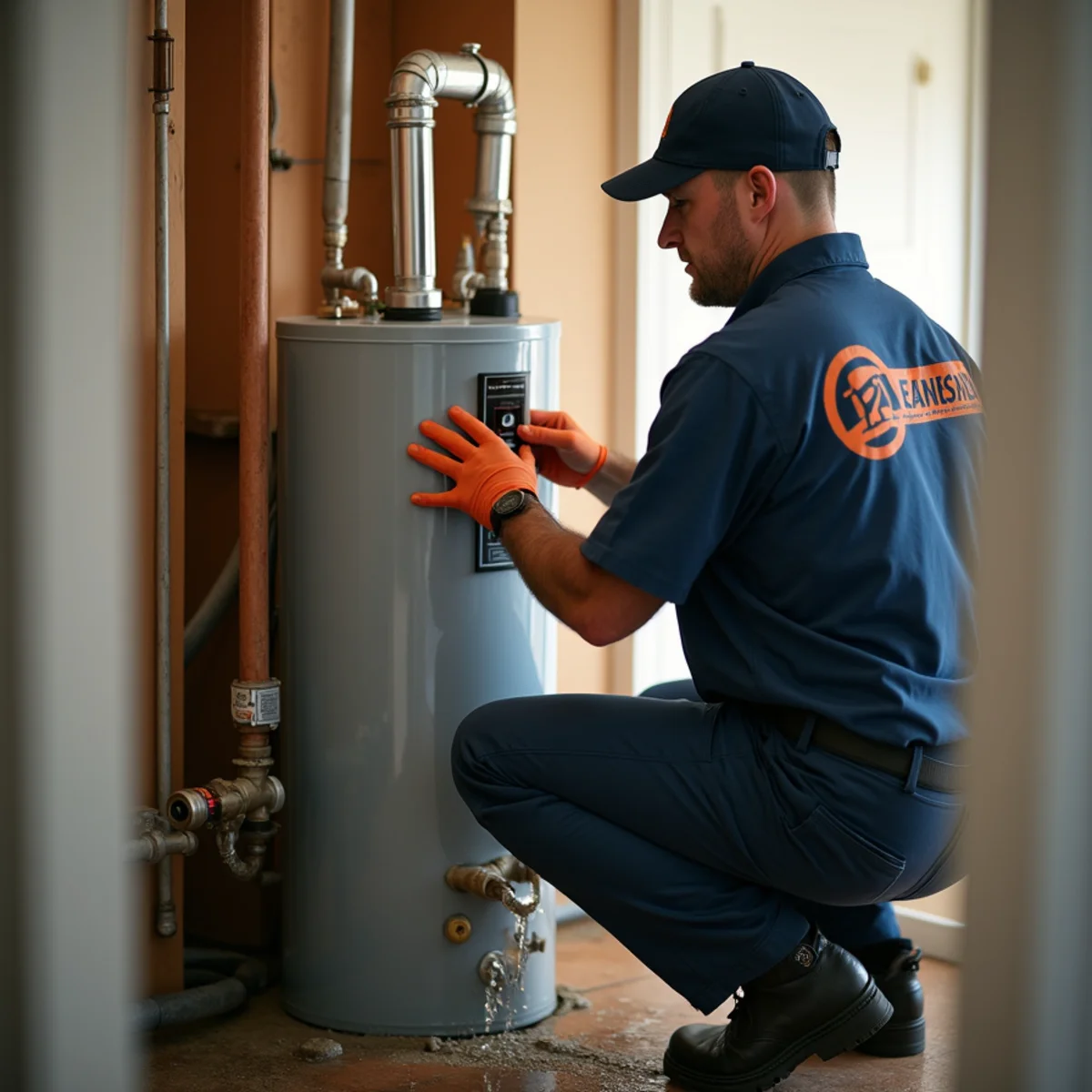
The manufacturer’s manual usually says to flush your water heater once a year. That advice is written for average water. North Texas does not have average water.
Our supply from the North Texas Municipal Water District is hard — heavy with the dissolved minerals that drop out of solution and settle to the bottom of your tank as sediment. That layer of grit is the quiet killer of water heaters here. It insulates the burner from the water it is supposed to heat, forces the unit to run longer and hotter, and can corrode the tank from the bottom up. Left alone, it is why so many North Texas water heaters die years before they should.
So how often should you actually flush a water heater in North Texas? More often than the manual assumes, and here is how to figure out the right interval for your home.
Why hard water changes the math
Every gallon of hard water that enters your tank carries dissolved calcium and magnesium. Heat it, and those minerals precipitate out and settle as sediment. The harder the water, the faster the pile grows. On NTMWD water, a tank can accumulate a meaningful sediment layer in a single year — enough that you can hear it.
That popping, rumbling, or crackling sound from the tank is not the unit dying yet. It is water trying to boil under a blanket of sediment on the tank floor. Every one of those sounds is wasted energy, and the trapped heat stresses the steel and the glass lining above it. The sediment also gives corrosion a place to start, which is how a tank ends up leaking from the bottom.
A realistic North Texas schedule
There is no single right number for every home — it depends on your water and your usage. Use this as a starting point:
- No water softener, hard NTMWD water: flush every 6 to 12 months. If you hear rumbling before the year is out, that is your tank telling you to flush sooner.
- With a water softener installed: once a year is usually fine, because softened water deposits far less sediment. Softening is the single best thing you can do to extend a water heater here.
- Tankless units: descale (flush with a cleaning solution) every 6 to 12 months. Tankless heaters are more sensitive to hard-water scale, not less, because the mineral builds up on the heat exchanger.
- Older tank, never flushed: proceed carefully — see the caution below.
If you are not sure how hard your water is or how much sediment your tank is holding, the sound test is a decent proxy. A quiet tank that heats normally is probably in good shape. A tank that pops and rumbles is overdue.
How to flush a tank water heater safely
A basic flush is within reach for a handy homeowner. The steps below are the standard procedure. Read the caution that follows before you start.
- Turn off the power: for an electric unit, switch off the breaker; for gas, set the control to "pilot" or off.
- Shut off the cold-water supply valve at the top of the tank.
- Let the water cool if it has been running hot, then connect a garden hose to the drain valve at the bottom and run it to a floor drain or outside.
- Open a hot-water faucet somewhere in the house to break the vacuum and let the tank drain.
- Open the drain valve and let the tank empty, watching the sediment come out with the water.
- Once it drains, briefly open the cold supply in bursts to stir and rinse remaining sediment until the water runs clear.
- Close the drain valve, remove the hose, reopen the cold supply, let the tank fill completely (you’ll know it is full when the open faucet runs steady), then restore power or relight.
The longer-term fix: soften the water
Flushing manages the symptom. If you want to actually slow the sediment down, treat the water. A whole-home water softener removes most of the calcium and magnesium before they ever reach the tank, which dramatically cuts sediment buildup — and protects your fixtures, faucets, and appliances at the same time. On North Texas water, a softener often pays for itself in extended equipment life.
Whether you want a straightforward annual flush, a tankless descale, or a softener to get ahead of the problem for good, we handle all of it across Collin County. Call (831) 290-4327 and we will get your water heater set up for the way North Texas water actually behaves.
Frequently asked questions
On hard NTMWD water without a softener, every 6 to 12 months. With a water softener, once a year is usually enough. Tankless units should be descaled every 6 to 12 months because scale collects on the heat exchanger.
McKinney Pro Plumbers
Licensed McKinney plumbers serving Collin County and North Texas. Work performed under a Texas Responsible Master Plumber (TSBPE). Questions? Call (831) 290-4327.