
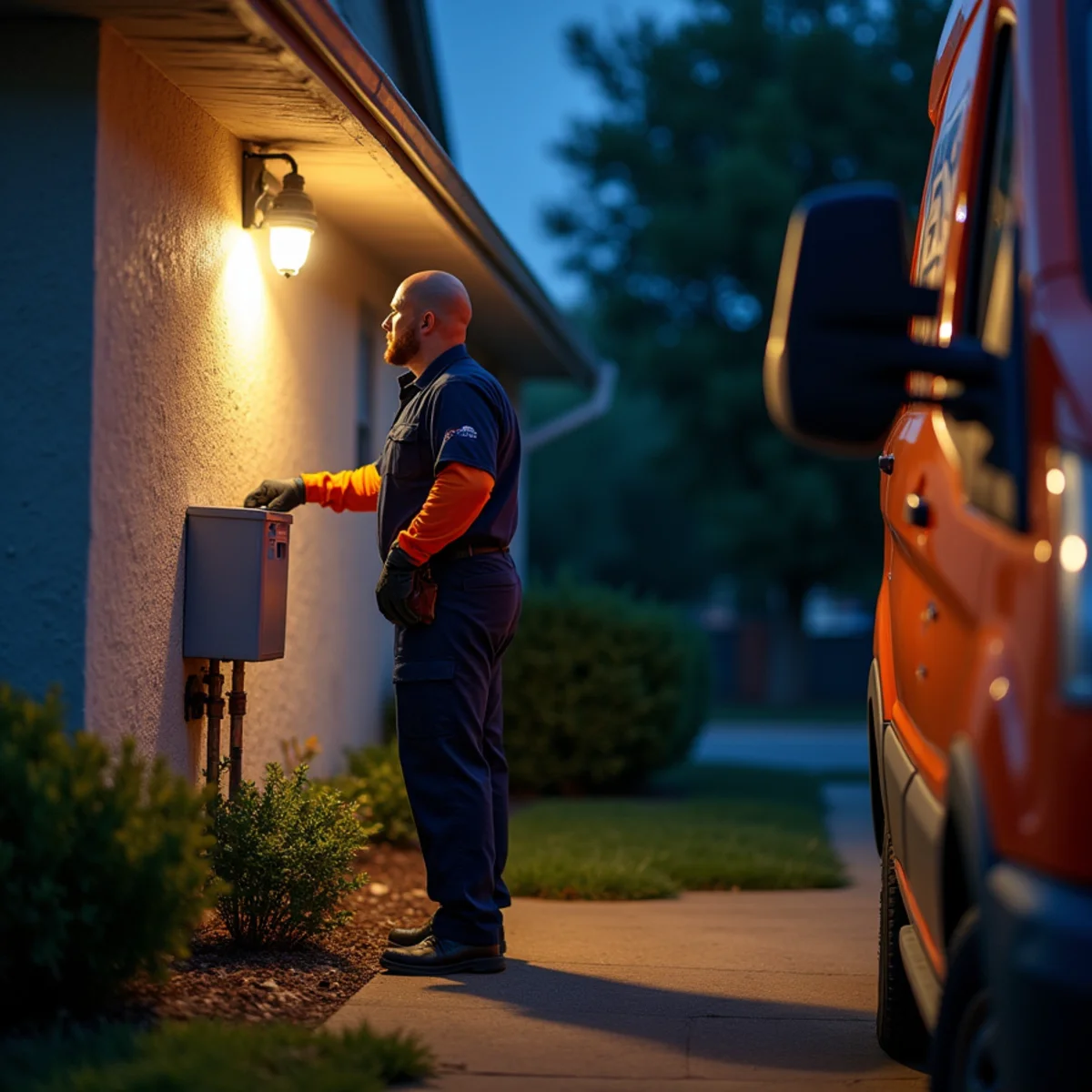
At 9 p.m. on a Sunday, every plumbing problem feels like an emergency. But calling for after-hours service costs more, and some issues genuinely can wait until morning without doing another dollar of damage. Others quietly destroy drywall, flooring, and framing while you sleep.
The line between the two comes down to one question: is water going somewhere it shouldn't, and can you stop it? This guide walks through what truly needs a plumber tonight, what can hold, and how to buy yourself time either way.
Call now: true emergencies
These problems get worse fast, threaten your health, or risk major structural damage. Don't wait on them.
- A burst or actively spraying pipe you cannot fully shut off at a fixture valve
- Sewage backing up into tubs, showers, or floor drains — a health hazard, not just a mess
- The smell of natural gas, or a hissing sound near a gas line or appliance
- No water at all in the whole house, or water you can only stop by killing the main
- A water heater leaking heavily or venting scalding water and steam
- Water near your electrical panel or pouring through a ceiling
Can usually wait until morning
These are annoying but stable. If you can isolate the fixture or catch the drip in a bucket, you'll pay standard rates by waiting for regular hours.
- A single slow-draining sink or tub, as long as it still drains
- A dripping faucet or a toilet that runs — turn its shutoff valve and move on
- One clogged toilet when you have another working bathroom
- Low water pressure at a single fixture with no visible leak
- A water heater that runs cool but is not leaking
The gray zone: it depends on whether you can stop the water
A lot of calls land in the middle. A leak under the kitchen sink isn't an emergency if you can close the shutoff valve and stop it. The same leak becomes urgent if the valve is stuck open and water keeps running. The deciding factor is always control: can you cut the water to the problem and keep the house dry until morning?
Slab leaks are a good example. A slow slab leak — warm spot on the floor, unexplained rise in your water bill — is serious but rarely a 2 a.m. call. A slab leak that's flooding a room needs someone tonight. When in doubt, shut the water off, contain what you can, and call to talk it through. A good dispatcher will tell you honestly whether it can wait.
What our 60-minute response actually covers
We run 24/7 emergency service across Collin County with a 60-minute response promise, which matters in a spread-out county where a McKinney dispatch might be headed to Allen, Frisco, or Prosper. From our base near Lake Forest Drive, US 75 and the Sam Rayburn Tollway put most of the county inside that window.
An emergency call is about stopping the damage first: isolate the leak, stabilize the system, and make the home safe. The full repair sometimes follows in daylight once the crisis is contained — and that's usually the cheaper, better-done path anyway.
Buy yourself time before we arrive
Whether it's a true emergency or a gray-zone call, these steps limit damage while help is on the way:
- Know where your main shutoff is and how to close it — interior valve or curb meter box
- Keep a meter key on hand for stiff curb valves
- Turn off the water heater if the main is off, so it does not run dry
- Move valuables and electronics away from the water and start documenting with photos
What it costs to call an emergency plumber (and what to ask)
After-hours, weekend, and holiday calls almost always cost more than the same work booked for a Tuesday morning — that is true of every trade, and it reflects a plumber leaving home at 2 a.m., not a gouge. The honest way to think about it: you are paying a premium to stop damage tonight instead of letting it run until Monday. When the water is contained and stable, waiting for regular hours is the cheaper, smarter call.
Either way, a real visit starts with a diagnosis, not a number. No honest plumber can quote a repair sight unseen, because the price depends on what is actually failing and how hard it is to reach. Expect a service or diagnostic fee to get someone out and the problem identified; the repair quote comes after. For DFW context, a minor repair commonly runs about $150 to $450 and clearing a drain roughly $150 to $400 — benchmarks, not promises, and your on-site quote sets the real figure.
- Is this an after-hours rate, and what does the service or diagnostic fee cover?
- Will you give me a written, itemized price before you start the work?
- Are you Texas-licensed and insured, and is the work warrantied?
- What will it take to stop the damage tonight versus finish the full repair?
Emergencies we handle most in McKinney
Across Collin County, a handful of calls make up most of our after-hours dispatches. Knowing what you are looking at helps you describe it clearly and act while we are on the way.
- Burst or frozen-split supply lines — common after a North Texas hard freeze hits exposed attic and exterior-wall runs
- Sewage backups coming up through tubs and floor drains — a health hazard that means the main line is blocked
- The smell of gas near a line or appliance — leave the house first, then call from outside
- No hot water during a freeze, or a water heater leaking or venting steam — urgent when a cold snap is on the way
Whatever the problem, the first move is almost always the same: shut off the water at the fixture or the main, make the area safe, and call. From our base near Lake Forest Drive, US 75 and the Sam Rayburn Tollway keep most of the county inside our 60-minute response window.
Frequently asked questions
Most do, and it's fair to ask about after-hours pricing when you call. The trade-off is real: paying an emergency rate to stop a burst pipe tonight is far cheaper than the water damage that piles up if you wait. For stable problems, waiting for regular hours saves money.
McKinney Pro Plumbers
Licensed McKinney plumbers serving Collin County and North Texas. Work performed under a Texas Responsible Master Plumber (TSBPE). Questions? Call (831) 290-4327.